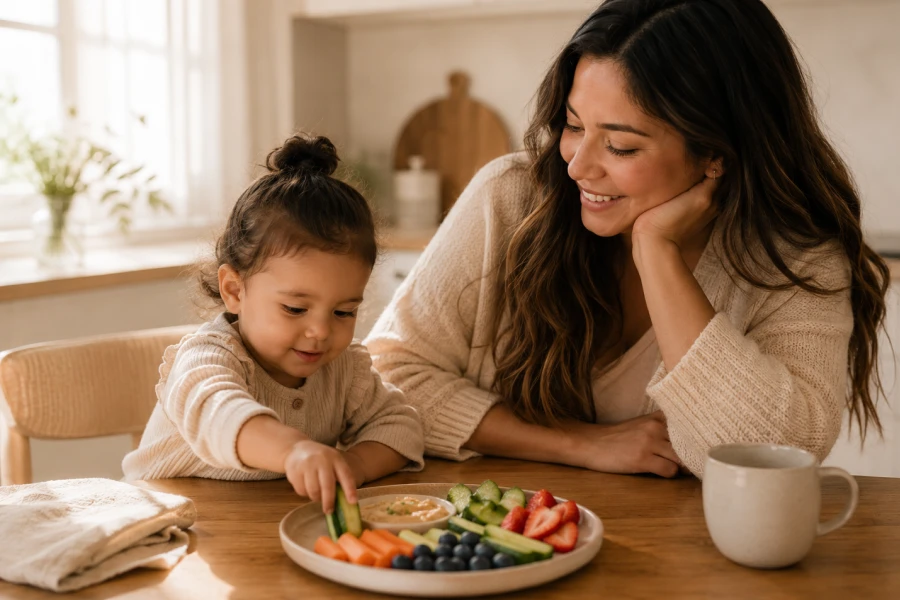
Learning to help picky eaters try new foods can feel like a daily negotiation, especially when every meal ends with refusal, frustration, or untouched vegetables. Many parents respond by pleading, bargaining, or hiding ingredients, yet those tactics often make food feel more stressful. Children need repeated, calm, low-pressure exposure before unfamiliar foods feel safe. That process takes patience, but it can transform the table. Instead of turning dinner into a battle, you can create an environment where curiosity grows slowly. With thoughtful picky eating solutions, parents can support progress without making every bite feel like a test.
Children often need to see, smell, touch, or taste a food many times before accepting it. That does not mean they are being difficult. Their brains are learning whether a new texture, color, or flavor feels safe. Help picky eaters try new foods by lowering the pressure around first reactions. A child may only touch a carrot one day, smell it another day, and taste it weeks later. Those steps still count. Parents sometimes miss progress because they only measure swallowed bites. A calmer approach notices every sign of growing comfort. Repetition builds familiarity, and familiarity opens the door to tasting.
Confidence at the table grows when children feel respected and guided at the same time. You can choose what foods to serve, but children need some control over whether and how much they eat. This balance prevents mealtime from turning into a power struggle. Parents who use child mealtime confidence strategies often find that curiosity appears once pressure drops. Serve one familiar food alongside one small new option. Keep portions tiny. Avoid long speeches about health. Let your child watch others enjoy the food naturally. Calm exposure teaches more than persuasion.
When you help picky eaters try new foods, the goal shifts from control to connection. You stop making every meal a verdict on your parenting. Instead, meals become practice opportunities. Some practices go well. Others feel messy. That is normal. A child may refuse today and nibble tomorrow. They may accept a food cooked one way and reject it another way. This flexibility is part of learning. Keep your tone neutral. Describe foods without pressure. Crunchy, sweet, warm, soft, or tangy are more useful words than good or bad. Neutral language helps children explore without feeling judged.
Low pressure exposure can happen outside full meals. A child may rinse berries, stir soup, place cucumber slices on a plate, or choose between two vegetables. These moments build comfort before eating begins. Many families use low pressure food exposure because it removes the spotlight from the plate. Cooking, shopping, and serving all create chances to interact with food. The child is not required to taste immediately. They simply become more familiar. Familiarity softens resistance. Eventually, tasting feels less dramatic because the food no longer feels completely unknown.
New foods feel less intimidating when they appear beside trusted favorites. Help picky eaters try new foods by pairing something unfamiliar with something safe. A new sauce can sit next to plain pasta. A new vegetable can appear beside a favorite protein. A tiny fruit slice can join a familiar snack plate. Avoid replacing all preferred foods at once. That can make children feel cornered. Instead, use small bridges between what they know and what they are learning. Parents often see better progress when novelty feels optional. The plate becomes an invitation, not a confrontation. That difference matters deeply.
Adventurous eating rarely begins with dramatic transformation. It begins with tiny acts of comfort. A child touches a pea. They lick yogurt from a spoon. They smell roasted squash without complaining. These are small, but meaningful. Families that focus on adventurous eating habits learn to celebrate the process, not just the outcome. Keep meals pleasant when possible. Model enjoyment without performing. Offer variety consistently. Let repeated exposure do its work. Children usually become braver when they are not forced to prove bravery on demand.
Help picky eaters try new foods with patience, because food confidence develops over months, not days. One difficult dinner does not erase progress. One refusal does not mean your child will always reject that food. Keep offering variety in small, calm ways. Keep familiar foods available. Keep your language neutral. Over time, children begin to trust the table again. They learn that new foods are not threats. They learn that tasting is their choice. That sense of safety supports real curiosity. The long game may feel slow, but it often creates healthier, calmer eating patterns that last.




Leave a comment