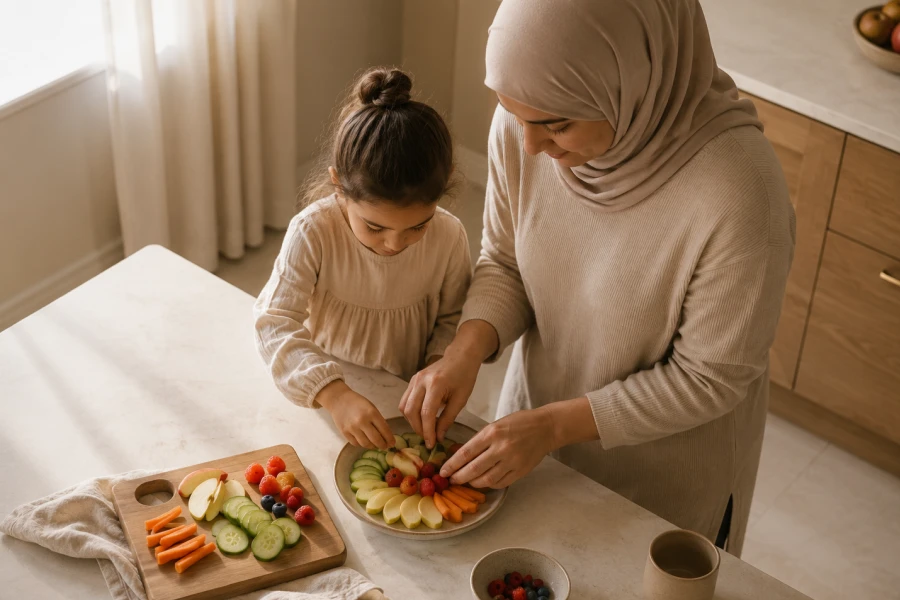
Child eating variety often begins long before a child actually swallows a new food. It starts with seeing, smelling, touching, preparing, and watching others enjoy that food without pressure. Parents understandably want quick progress, especially when meals feel repetitive or nutritionally limited. Yet children usually need comfort before curiosity appears. If the table feels tense, variety can feel threatening. If food exploration feels safe, progress becomes more possible. This is why kids nutrition support should include emotional safety, not only nutrient goals. A calmer process can lead to more sustainable eating changes.
Children trust food when meals feel predictable and adults respond calmly. Child eating variety becomes harder when parents pressure, bribe, criticize, or compare. Even well-meaning comments can make a child feel watched. That attention can shrink their willingness to explore. Try presenting new foods casually, then shifting focus back to conversation. Let your child decide whether to touch, smell, lick, or taste. Trust grows when refusal does not create drama. This does not mean you stop offering variety. It means you offer it without making acceptance the price of a peaceful meal. Safety invites exploration more effectively than pressure.
Reliable routines help children feel secure enough to try small changes. A predictable start time, familiar seating, simple choices, and repeated meal patterns can reduce anxiety. Parents can use mealtime routine ideas to create structure without turning dinner into a rulebook. Keep transitions gentle. Give a short warning before meals. Include at least one food your child usually eats. Serve new foods in tiny portions. These choices lower resistance before food even reaches the mouth. A calm routine helps children use their energy for exploration instead of defense.
Child eating variety can grow through age-appropriate food play, especially for hesitant children. Food play does not mean chaos at the table. It means safe interaction without immediate eating pressure. A child can stack cucumber rounds, dip a spoon into yogurt, tear lettuce, or arrange fruit slices. These small experiences teach texture, smell, and appearance. They also make unfamiliar foods less intimidating. When children handle food, their brains gather information. That information can reduce fear later. Parents may feel impatient, but interaction is progress. A child who plays with a food today may taste it another day.
Confidence grows when children experience small wins repeatedly. A child may agree to keep a new food on their plate. Another may lick sauce from a finger. Someone else may take one tiny bite and stop. Each step deserves calm recognition, not a celebration that feels overwhelming. Families focusing on food confidence for kids understand that bravery looks different for every child. Avoid comparing siblings or friends. Comparison can create shame. Instead, notice personal progress. A quiet statement like “You smelled it today” can be enough.
Refusal is part of the process, not proof that the process failed. Child eating variety develops through repeated offers, and some offers will be rejected. Stay neutral when that happens. You can say, “That is okay, it can stay on the plate.” Then continue the meal. If refusal becomes dramatic, reduce attention to the food and return to connection. The less emotional energy you give the refusal, the less power it holds. Keep offering the food another time in a different form. A rejected raw pepper may become acceptable roasted, diced, or paired with a favorite dip.
Children do not eat the same amount every day. Growth, fatigue, illness, mood, and activity all affect appetite. Sensory preferences also matter. Some children need more time with smells, textures, or mixed foods. Respecting these factors helps parents respond wisely. Supportive feeding does not mean ignoring nutrition. It means approaching nutrition with patience and skill. Use small servings. Keep water available. Avoid forcing full portions. Invite participation in shopping or cooking when possible. These choices make food less abstract. When children understand food through multiple senses, eating it can feel less intimidating and more familiar.
Child eating variety becomes everyday progress when parents stop waiting for one dramatic breakthrough. Progress might look like less complaining, more touching, calmer sitting, or willingness to smell a food. These signs matter because they show reduced fear. Keep offering variety in relaxed ways. Keep familiar foods present. Keep expectations realistic. Over time, children often become more open because the table feels safer. They learn that new foods can appear without pressure. They also learn that their body cues matter. That combination supports healthier eating and stronger trust. Variety then becomes a family rhythm, not a nightly argument.




Leave a comment